


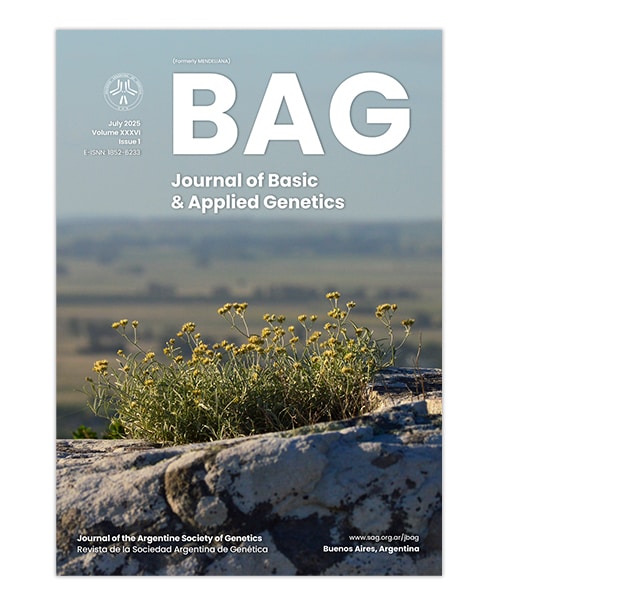
Vol. XXXVI Issue 1
July 2025
ISSN online version: 1852-6233

Esta obra está bajo una Licencia Creative Commons Atribución-NoComercial-CompartirIgual 4.0 Internacional.
ARTICLE 1 – research
DELETIONS IN THE NPHP1 GENE AND THEIR ASSOCIATION WITH NEPHRONOPHTHISIS: CASE REPORT
DELECIONES EN EL GEN NPHP1 Y SU ASOCIACIÓN CON NEFRONOPTISIS: REPORTE DE CASO
Lugones A.C., Aguirre N.M., Guillamondegui M.J., Iglesias García L., Erra L., Tardivo A., Martínez Mayer J.,
Waldman M., Julián P., Fernández Robetto A., Recabarren A., Pérez Millán M.I., Martí M.A.
Nephronophthisis is a hereditary kidney disease with considerable phenotypic variability, characterized by chronic tubulointerstitial nephritis and progression to end-stage renal disease. Approximately 20 genes are associated with either isolated (80-90%) or syndromic (10-20%) forms, most of which follow an autosomal recessive inheritance pattern. This study presents the case of an 11-year-old patient, born to healthy non-consanguineous parents, with chronic renal failure of unknown etiology, associated with polycystic kidney disease. A genomic analysis was performed with the aim of detecting single nucleotide variants and copy number variants in a gene panel associated with the clinical suspicion. Two variants in the NPHP1 gene were identified in a compound heterozygous state: the c.1897_1906del p.(Thr633LeufsTer37) variant and a deletion involving the entire gene. These findings suggested juvenile nephronophthisis associated with NPHP1 as the most likely etiological diagnosis for this patient. For the final classification of the genetic variants, family segregation information and phenotypic data were integrated, implementing the ClinGen and ACMG/AMP guidelines, allowing an accurate interpretation of their pathogenicity.
Key words: bioinformatic algorithms, classification guidelines, genomic analyses, nephronophthisis
Language: Spanish
Esta obra está bajo una Licencia Creative Commons Atribución-NoComercial-CompartirIgual 4.0 Internacional.
ARTICLE 2 – research
A NOVEL DLGAP2 VARIANT IDENTIFIED AFTER EXOME SEQUENCING OF AN INFANT WITH AUTISM SPECTRUM DISORDER (ASD)
UNA NUEVA VARIANTE DEL GEN DLGAP2 IDENTIFICADA TRAS LA SECUENCIACIÓN DEL EXOMA DE UN NIÑO CON TRASTORNO DEL ESPECTRO AUTISTA (TEA)
Medici D., Atienzar Aroca R., López Castel A.
Autism spectrum disorder (ASD) encompasses various conditions related to neurological development alterations, affecting millions of people worldwide according to the World Health Organization. ASD displays a multifactorial etiology arising from complex interactions between genetics, epigenetics, and environmental factors. ASD diagnosis is primarily based on behavioral and neuropsychological evaluation; recent years have seen an increase in the use of various genomic analysis technologies to attempt to generate a map of potentially implicated genes. This study focused on an 8-year-old boy with a complex clinical history from birth. The patient was diagnosed at the age of four with ASD, level 3, due to difficulties in all areas of development (language, social interaction, play, cognition, and behavior). Given the severity of his phenotype, various genetic studies of increasing sensitivity were conducted including a targeted exome sequencing enriched using the Twist Human Customized Core Exome Kit. The objective of this study was to identify genetic variants potentially associated with the reported clinical diagnosis of ASD. Data were normal for karyotype and for FMR1 gene exon 1 sequencing. Comparative genomic hybridization (CGH) array and targeted exome sequencing were also performed. These additional studies identified several genetic changes compared to reference genomes, 49.41 kb deletion (coordinates 94,621,121-94,670,533) encompassing part of the GPC gene in band 13q31.2, as well as heterozygous changes in the coding sequence of the DHDDS and DLGAP2 genes with uncertain clinical significance according to reports from the laboratory responsible. However, the detection of the variant in the DLGAP2 gene seems not to be a random occurrence since a relevant number of publications are pointing out a connection with ASD diagnosis. The extensive genetic characterization performed allowed the detection of several variants in his genome. Our evaluation of the clinical data and the identified genomic changes confirms the relevance of the new DLGAP2 gene variant and are compared with the literature to suggest phenotype-genotype correlations.
Key words: autism spectrum disorder, whole exome sequencing, rare variants, DLGAP2 gene
Language: English
Esta obra está bajo una Licencia Creative Commons Atribución-NoComercial-CompartirIgual 4.0 Internacional.
ARTICLE 3 – research
GENETIC AND CARDIO-METABOLIC RISK FACTORS OF ESSENTIAL HYPERTENSION: A STUDY IN A CENTRAL ARGENTINEAN POPULATION
FACTORES DE RIESGO GENÉTICOS Y CARDIOMETABÓLICOS EN LA HIPERTENSIÓN ESENCIAL: ESTUDIO EN UNA POBLACIÓN DEL CENTRO ARGENTINO
Correa M.M., Arce M.E., Fuentes L.B.
Essential hypertension is a multifactorial disease influenced by both genetic and cardiometabolic factors, with variable prevalence and risk profiles among different populations. Polymorphisms in genes of the renin-angiotensin-aldosterone system (RAAS) and endothelial function have been widely studied for their role in blood pressure regulation and the development of cardiovascular complications. The aim of this study was to investigate the ACE I/D, AT1R A1166C, AGT M235T and eNOS Glu298Asp polymorphisms, together with traditional risk factors, in relation to essential hypertension in a population from San Luis, Argentina. A total of 208 hypertensive patients and 150 normotensive subjects were included. Demographic, anthropometric and biochemical data were collected and analyzed. Genotypic and allelic frequencies of the polymorphisms were determined by PCR-RFLP. Significant differences were found in body mass index (BMI), age, fasting glucose, total cholesterol, HDL-C, triglycerides, and dyslipidemia, with higher levels in hypertensive subjects. Advancing age, overweight, elevated fasting glucose and triglyceride levels were identified as metabolic risk factors. Genotypic and allelic frequencies of the studied polymorphisms did not differ significantly between hypertensive and control groups. No association was found between the studied polymorphisms and hypertension in our population. Age, overweight, elevated fasting glucose, and elevated triglycerides were identified as significant predictors of hypertension in this population.
Key words: endothelial nitric oxide synthase, genetic polymorphisms, hypertension, renin–angiotensin-aldosterone system, risk factors
Language: English
Esta obra está bajo una Licencia Creative Commons Atribución-NoComercial-CompartirIgual 4.0 Internacional.
NOTE TO THE EDITOR
PROFESSIONAL BODIES: HOW BEST TO PROMOTE AND SUPPORT INDIVIDUALS WORKING IN HUMAN GENETICS AND GENOMICS
ASOCIACIONES PROFESIONALES: LA MEJOR MANERA DE PROMOVER Y APOYAR EL TRABAJO DE LOS PROFESIONALES DE LA GENÉTICA Y GENÓMICA HUMANAS
Larrandaburu M., Alfadhel M., Alkuraya F.S., Cornel M.C., García-Ortiz J.E., Lai P., Matsumoto N., Newman W., Rojas-Martinez A., Slaugenhaupt S., Tishkoff S., Wonkam A., Vears D.
Esta obra está bajo una Licencia Creative Commons Atribución-NoComercial-CompartirIgual 4.0 Internacional.